Thursday, May 17, 2012

HBS No.500 Submitted for Printing

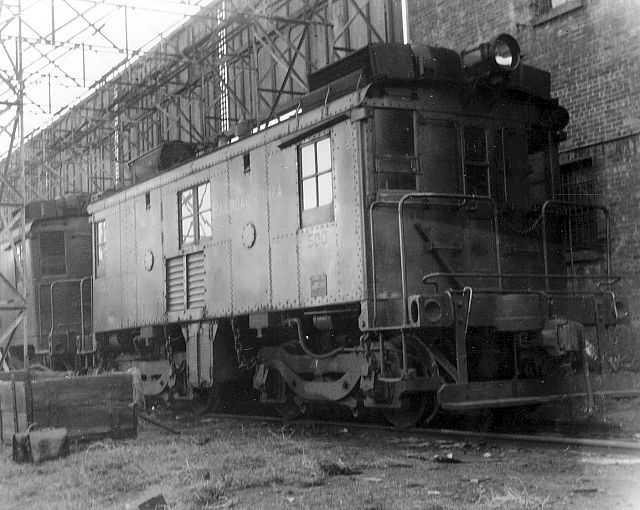
The SketchUp! model of the boxcab. After modeling (and correcting, and re-correcting) the file was exported to a Collada file (.DAE). I believe this option is only available in the Pro version of SketchUp! I modeled just the basic shape - I will add the details using brass, styrene, etc. after printing.


I've made the second step towards scratch building the Hoboken Shore no.500 GE/IR boxcab. I sent off the model to Shapeways for 3D printing in a flexible and strong plastic. It took a few attempts to get the model accepted because of wall thickness at a couple of spots on the model. The printer's "resolution" only allows for wall thicknesses .7mm or greater. The rounded roof was originally thinner, but hopefully the printed model won't suffer for being a few tenths of a millimeter thicker than I intended. My latest build is in for manufacturing, and I could still get errors returned from the shop when they actually try to print. If all goes well, I should receive it in a couple of weeks.

From HBS.railfan.net
I worked off of pictures from the excellent HBS.railfan.nethbs.railfan.net website, the Benjamin L. Bernhart book Hoboken Shore Railroad, and Train Shed Cyclopedia No. 43.

From Benjamin L. Bernhart's excellent reference book Hoboken Shore Railroad, 2006


For the details, I plan to model in AutoCad and print on a Makerbot Industries Thing-o-Matic 3D printer. I might need to use Shapeways again if the detail doesn't come out as well as I want with the Makerbot, as Shapeways offers finer grade plastics as well as metal laser sintering in stainless steel or alumide which may yield better results in some cases. I've seen N scale side frames 3D printed to good results, but I'll check if there are any ready-mades that are close. Railings and such will be wire, and I'm thinking the Archer rail car rivet decals for, well, the rivets.

The model after being uploaded to Shapeways.
The plan is to use Northwest Short Lines Stanton drive(s?) to power this 300 h.p. baby boxcab. Choosing a decoder will be interesting, as no one has recorded sounds from a prototype, yet. There is some discussion about which sounds that are available are closest, but it boils down to a normally aspirated 1st generation engine: a Baldwin 608 Na, although I will have some Baldwin switchers in the Erie yards already, or maybe a Galloping Goose is more in the appropriate horsepower range? :)

Any ideas are welcome, as always.

Friday, May 11, 2012

More Collateral Railroading Activities

The 2012 Port of New York Railroad Mug


In honor of the 1000th page read here at the PoNYRR blog (yea! and thanks for the interest!), I have created a 2012 Port of New York Railroad mug in my Zazzle store. Featuring logos from the railroads I intend to model in some form or fashion on the layout as well as one of the photos from my collection of Erie no.26 44-tonner. I've got a couple of mugs on the way, and I will let you know how they turn out.

On related news, it is summer and there may actually be some modeling that happens over the course of the next few months. I am finishing up a scale test car and locomotive decal projects, as well as some experiments with the Stanton Drive. Please give a shout out if you are working with a Stanton already - there isn't much written on it, yet. I will either re-power a 44-tonner or a Roundhouse boxcab. I might even scratch build a boxcab from the 3D model I have been working on.

My hope is that the Stantons draw less than .5 amp so that I can use my Micro Tsunami and mini LokSound decoders, which so far haven't worked in anything I've installed them in. The irony could be that with the Stanton motors under the chassis, I could use regular size decoders and wouldn't need the micros in those units. Oh, well.


Saturday, May 5, 2012

Builder's Card no.520


"BUILT FOR THE ERIE" Builder's card photo of Erie no.520 hot off the assembly line in June of 1949.


I just received my latest photo find, a builder's card photo of Erie no.520. While I originally got this to add to my photo collection, this rekindled an idea about creating a photo roster inventory system for the layout.


Reverse side of 8" x 3" builder's card. Great information about the locomotive.


This idea is far from original. I have seen similar ideas for car cards as a means of visual identification, and even one of my favored vendors, Centerpiece Rolling Stock ships a small builder's photo with each finely weathered and detailed item they sell. It is a nice touch, and the idea could be extended to a maintenance card system.


Approximately 3-1/4" x 2-1/2" builder's photo from Centerpiece Rolling Stock. On the back is handwritten, "Custom built for Riley Triggs by Centerpiece Rolling stock".

Several people have inventory applications or even simple spreadsheets that catalog and provide some measure of recording work, origin, price, etc. for locomotives and rolling stock. I use Yard Office at the moment, and it provides the feature to add a photo of your inventory item. By the way, I do like Yard Office, but I am ready for an iPhone app version that I can access while at the hobby shop, local train show, or just surfing for eBay bargains away from my computer. This would allow a quick check to see if I already had one of something (how many times do I wonder if I have that particular road number, or do I already own that unusual flatcar load?) so that my buying is as efficient as possible.

Screen shot of my Yard Office entry for a repainted Bachmann 44 tonner for the Hoboken Shore. Sharp readers will notice that the lower body section (where words "Hoboken Shore Railroad" appear) is mistakenly painted green instead of the prototypical black. This is a hazard of working with distractions around. I've already purchased another set of decals from Paul at Prime Mover Decals, but I'm not going to repaint it until I get the sound decoder working properly!

So yes, there are electronic versions of the builders photo which are very useful, but I wonder if I might prefer a printed version to have at my workbench. The back, instead of the specifications of the prototype item would have space for noting coupler type, wheelsets, trucks, accessories, light bulb, decoder, etc. while leaving room for a maintenance log with date and work performed spaces to fill in.

So why this old school physical form from such a tech guy? During the day I think a lot about the difference between virtual and actual environments and how information is handled in each. I'm very much of a computer and electronic user/proponent, but I am really concerned with appropriate use of virtual information systems, and I spend some effort to think of ways that the gap between our virtual existence and our physical being is made as small as possible. So what about the physical nature of a builder's card makes it desirable over a purely electronic record keeping method? 

The tactility of it is what appeals to me. Scratching a few notes on a piece of card stock with a no.2 pencil just seems like the right thing to do for a hobby that ultimately is all about physical objects and sensations. It may also be more "prototypical" for a 1950s railroad shop to have a file or note card system of keeping track of the essential information on capital investments, but there is just something more engaging about touching a photo card and interacting with it physically that makes the experience more than just the act of keeping a record - it is more real because it involves touching an object and not a keyboard. It may even be more convenient, since it would be in the place where maintenance happens and not at my computer desk a few steps away.

So back to my original find - the AMERICAN LOCOMOTIVE COMPANY S-2 builder's card. The best thing about it is that it is physical. And even more so than a regular photograph, the card stock it is printed on and the information on the back begs for this artifact to be held, explored, used and appreciated. Certainly different than having an image on a computer screen, and that difference is one worth thinking about. 

Thursday, April 12, 2012

New Jersey Junction RR Map 1911

1911 map of the New Jersey Junction Railroad
Some of the notable directors on the board of the New Jersey Junction Railroad in 1911 were William Rockefeller, William and Frederick Vanderbilt, and J.P. Morgan. So there must have been something of interest going on along this part of the Jersey Shore before Snooki. Taking a look at the vitals in the image below, the line ran from Weehawken headquarters to Jersey City for a grand total of 4.44 "main line" miles and .34 "branch line" miles. The cost of the road was $367K per mile and the stock price was $100/share.

Turns out that all the shares belonged to the New York Central and Hudson River Railroad Company (hence the big names involved), but there was certainly already lots of business to be had on the West Shore of the Hudson in 1911, and probably more importantly, the need for the connection between the West Shore RR (also owned by the NYC) in Weehawken to Jersey City and another access point to Manhattan, etc. Along the way the NJJRR ran across the Erie and the DL&W that went to the Hudson as well. The line ran right alongside the Erie's Weehawken Branch line, and I believe became part of Conrail's River Line branch.


The vital statistics of the NJJRR of 1911

Saturday, April 7, 2012

More old locomotive photos

Boxcab no.19 at Jersey City, NJ June 29th of 1958 looking pretty darn sharp. According to Phil M. Goldstein's freightrrofnyc.info, no.19 was scrapped in November of 1958 at Meadville, PA. Looks too good in this shot to be scrapped only a few months later.
I have gotten a really good cross-section of Erie locomotive photos that I am interested in having on my layout, so I may branch out to try to find some shots of the other railroads in the Port of New York area later on.

Besides the obvious usefulness of having these photos to be able to model the locomotives accurately and realistically, I find the little stuff found in the photos that have nothing to do with the locomotive proper to be of great value. These things can go a long way towards increasing the depth and richness of the modeling experience by providing insight into the details and context of the railroad one is modeling.

For instance, in the photo of no.19 above, there are several small piles of sand around the tracks from locomotives trying to get some starting tracking I presume. This is probably at a place where either road locomotives hook on to the trains at departure tracks or possibly some particular shunting location at the end of a classification area, etc. The photo above is from Jersey City, and if I knew the yard better, I could tell where this is by the building in the background.

I've modeled these sand piles before on Chuck Ellis' railroad in the yard and at passenger stations that are on grades, etc., but I had kind of forgotten about that particular element until seeing this photo. That makes it worthwhile to browse through the books and photos every once in a while to remember these already known elements and to find new ones. Cataloging these photos I have and applying tag words to their files makes it easy to find everything taken in Jersey City, for example, for either quick reference or browsing collections. This may seem like a chore, but the act of organizing allows for dedicated time to focus on the photos in a directed way that can yield deeper understanding and information about the photos themselves because of the increased attention and purposeful scrutiny.  This can make for nice collateral value from the research process.

No 614 in Buffalo, NY 12 February 1960. Besides the general locomotive information, the structure of the power poles is a good bit of modeling information.

No.707A looking smart outside Maybrook, NY, 24 February 1960. Look how and where the snow has clung to the coupler and pilot.

DL&W no.404 at East Binghampton, NY 12 April 1957. A bit of surprising info is the old Erie logo on the car behind this Lackawanna locomotive. It seems that it is late to have that logo (which was around from pre-1900s to around 1930s perhaps) still showing up in the late 50s. My guess is that it is an old wood reefer, but I bet someone else can identify it more definitively. The obvious direct take-away is that there is room for old equipment on a layout.

Friday, April 6, 2012

Chuck Ellis' GN&P

Last night was my first visit to Chuck's Great Northwestern and Pacific layout in quite some time, and so I was expecting to see some new stuff. What I hadn't factored in was that Dick Sowash had been hard at work over the past year building over 80 new structures for the main city of Great Falls. It blew me away. Lots of other things to see, too, including new track and electronics. I just wanted to get a couple of shots posted quickly of Dick's work, and I'll show more later.

The photos are all from the West end of Great Falls. The eatery is in the rail yard which is situated in the middle of the layout and serves as a division point. The rest of the shots start to show the town itself which is above the yard.

Chuck's layout was the subject of an article I wrote for Model Railroader in the December 2002 (?) issue. I'll have to verify the date. Chuck and I decided last night it was time to write another article to update the vast changes and additions that have happened over the course of 10 years.

I'll post more on this layout in my modelrailroaddesign.blogspot.com blog.

Sunday, April 1, 2012

Dock photos

"Cover Photo: The cover shows Erie's "farm" at Weehawken - one of the world's most unusual farms, for it is also a freight station, a station where rail transport ends, and water transportation begins on the Erie. More about it, and the Erie's lighterage service, on page 15." (collection of the author Creative Commons License)
Happy April. The photo for the cover of the 1957 issue was taken at Erie's Weehawken docks yard and there is a light dusting of snow on the ground and the thousands of crates stacked between the tracks. Many photos indicated that a lot of these crates contained automobiles.

Using lighterage to transport what appears to be an automobile crate. (collection of the author Creative Commons License)